

98xx

98xx Horror
98xx Jumping Julian

98xx PC

98xx Unblocked

A House for Alesa 2

Brotato Premium







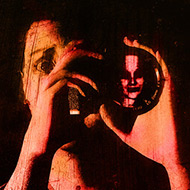
You nudge the exposure slider up one more notch and something in the corner of the frame that wasn’t there a second ago is suddenly, unmistakably there. Shutter Story builds its entire opening stretch around that exact sensation, and it works because nothing is explained to you before you need it explained.
| Genre | Screenlife psychological horror |
| Platform | PC |
| Mode | Single-player |
| Core Focus | Photo and video analysis |
| Perspective | Desktop interface with first-person sections |
Every session opens on a computer desktop, not a hallway or a character model, and that framing is deliberate. You’re not controlling Eli directly at first — you’re sitting behind SpectralAware 2.1, the analysis tool he’s handed you, scrubbing through his family’s photo album one exposure adjustment at a time. Tweak contrast, pull noise reduction down, isolate a color channel, and wait. Most images give up nothing. Some give up a shape in a doorway that has no business being there.
The interface itself becomes a character of sorts, or at least the closest thing this game has to one in its opening hour. You start to recognize the rhythm of its sliders faster than you recognize the rooms in Eli’s house, and that inversion — trusting software before you trust your own eyes — is exactly the discomfort the developers are chasing.
New players tend to rush this stage. They drag every slider to its extreme immediately instead of working incrementally, and they miss the subtler anomalies that only surface at specific, narrow ranges. Slowing down is the actual skill here, not clicking fast.
Once you spot something, Shutter Story hands you a manual and asks you to sort it: Apparitions, Simulacra, Strange Lights, or Demonic Entities. This sorting step is where a lot of first-time players stumble, because the categories overlap on purpose. A blurred reflection could plausibly sit in two boxes, and the game gives you almost no direct feedback on whether you guessed correctly in the moment.
That ambiguity is intentional and it’s also one of the more argued-about design choices in early community discussion. Some players find the lack of instant confirmation maddening. Others say it’s the whole point — you’re meant to sit with uncertainty the same way Eli has been sitting with it for weeks before you arrive.
By the time you reach the first full first-person sequence, the desktop framing has already trained you to distrust static images, which makes moving through a real hallway in real time feel far more exposed than it should.
The most common early mistake is treating this like a straightforward hidden-object game. It isn’t. The photo analysis loop rewards patience and pattern recognition more than reflexes, and players who bulldoze through images without adjusting multiple variables at once — exposure and noise together, for instance — miss anomalies that only appear under compound edits.
A second mistake: ignoring the audio design during analysis. Ambient sound shifts subtly when you’re looking at a photo that actually contains something, and players who mute the game or play with headphones off tend to misclassify far more often.
Players who favor methodical, checklist-style play tend to get more out of the classification system than those chasing quick jump moments, since the game is paced closer to a slow investigation than a scare gallery.
Forum discussion around the game has already settled on its own shorthand. Players talk about “ghosting an image” when a photo shows nothing on first pass but reveals an anomaly after a second full slider sweep, and they describe a wrongly filed anomaly as getting “bounced,” since misclassified entries tend to resurface later in altered contexts rather than disappearing.
Not everyone is on board with the ambiguity. A recurring criticism is that the classification system never tells you your accuracy rate, which some players find thematically appropriate and others find simply frustrating in a game that otherwise rewards careful attention. It’s a fair complaint, and one the community keeps circling back to.
The public demo runs roughly 45 minutes and includes 19 photographs and videos to analyze along with a handful of first-person exploration segments inside Eli’s house. The full release expands that library considerably, with more than 80 images and clips woven through a longer, multi-generational storyline.
Incorrect classifications don’t produce a game-over screen. Instead they can subtly shift later conversations with Eli and influence how aggressively the haunting escalates once you move into the first-person sections, so mistakes compound rather than simply resetting.
It leans heavily toward slow-burn dread rather than constant scares. Most of the tension comes from the photo analysis itself and the growing suspicion that something in Eli’s house has been rearranged since your last visit, with sharper moments reserved for specific first-person sequences.
Shutter Story isn’t interested in telling you what you’re looking at — it wants you to sit with the SpectralAware feed a little longer than feels comfortable and decide for yourself whether that shape by Eli’s staircase belongs to a Simulacrum or something worse, and that discomfort is exactly why people keep talking about it.