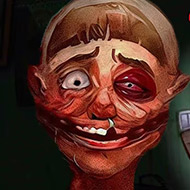
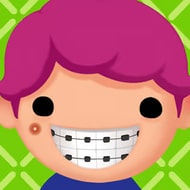
In Hi, What’s Your Emergency you start with nothing but a barricaded door and a phone line, which matters the moment the pounding on the other side begins.
| Genre |
Narrative horror, decision-based |
| Platform |
PC |
| Mode |
Single-player |
| Core Focus |
Branching hotline navigation under pressure |
| Outcomes |
Six distinct endings |
Navigating the Hotline Menu in Hi, What’s Your Emergency
The central mechanic is a menu tree modeled on a real emergency hotline system, and it’s built to feel bureaucratic on purpose. Options look simple on the surface, but each wrong selection burns seconds you don’t have, and the game never slows down to let you reconsider a choice once it’s made.
Players who go in expecting a straightforward multiple-choice horror game tend to underestimate how punishing a single misclick can be, since Hi, What’s Your Emergency treats the phone tree itself as the primary source of tension rather than a side puzzle.
Balancing the Door Barricade Against the Phone Tree
While you’re working through hotline prompts, the door behind you needs attention too. Ignoring the barricade to focus purely on the phone menu is one of the fastest ways to lose ground, since the game punishes tunnel vision on either task almost immediately.
- Scraping sounds against the door frame signal an attempt to force entry
- Muffled yelling from elsewhere in the house builds background pressure
- Heavy footsteps closing in indicate diminishing time to react
Reading Audio Cues Before They Become Warnings
Sound carries most of the tension in Hi, What’s Your Emergency, and players who mute the game or play without headphones consistently report missing the cues that would have told them to reinforce the door earlier. This is a game built around listening as much as clicking.
The Six Endings Players Argue About Most
- The Salvation Ending, where the hotline navigation succeeds and help arrives in time
- The Spiraling Ending, triggered by a late mistake that unravels an otherwise solid run
- The Mistake Ending, a dead-end menu state caused by a single wrong selection
- The YOU Ending, which turns the framing inward on the player’s own choices
- The Whipping Ending, where help arrives too slowly to prevent further harm
- The Late Arrival Ending, where rescue comes after the worst has already happened
Community discussion around these six outcomes tends to focus on how thin the margin is between the Salvation Ending and several of the darker ones, since a single delayed decision can be the entire difference.
Where Hi, What’s Your Emergency Divides Its Audience
The subject matter itself is genuinely divisive. Some players find the true-story framing gives real weight to every choice, while others feel a game built around a child escaping domestic abuse sits uncomfortably inside a horror-game storefront next to lighter fare. Both reactions show up regularly in discussion around the game, and neither is unreasonable.
How many endings does Hi, What’s Your Emergency have?
There are six confirmed outcomes, ranging from the successful Salvation Ending to darker results like the Whipping Ending and Late Arrival Ending, all determined by how well the player balances the hotline menu against the physical barricade.
Is Hi, What’s Your Emergency based on a true story?
The developers have described it as inspired by real events, framing the narrative around the experience of a child locking themselves in a room and calling for help while an abuser attempts to break in.
What happens if you pick the wrong option on the hotline menu?
An incorrect selection wastes precious time and can push a run toward the Mistake Ending or destabilize an otherwise strong attempt, making careful menu navigation just as important as managing the door.
Few horror releases lean this hard into a single sustained moment of dread, and Hi, What’s Your Emergency earns its unsettling reputation by making the gap between the Salvation Ending and everything worse feel genuinely, uncomfortably narrow.