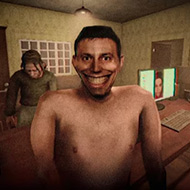
Photomaly puts you behind the counter of a photo studio your father left behind, handling customer orders, developing film in the darkroom, and restocking supplies — while something in the shop slowly stops making sense. Released on Steam in July 2026, it earned Very Positive reviews within its first days, and the reason players keep talking about it is not the jumpscares. It is the way the horror grows out of a job you almost understand.
| Genre |
PSX-style horror / management sim |
| Platform |
Windows (Steam) |
| Release |
July 21, 2026 |
| Structure |
6 days (shifts) |
The Studio Workflow at the Core of Photomaly
The studio hub in Photomaly connects four distinct stations: the counter where you greet customers, the computer where you process USB orders, the darkroom where film develops into prints, and the supply shelf you restock with Paper, Ink, Envelopes, and Film. Every customer order runs through this loop from capture to delivery, and learning that route in the correct sequence is the first real challenge the game presents. Beginners who try to rush a print without checking the order slip first will misread the required frame count or forget to load the right film type, which burns supplies and time.
The father’s photograph hanging behind the counter becomes a quiet progress marker across your six shifts. Early in the game it appears blurry and unremarkable, easy to ignore while you are focused on order slips and supply levels. By the time you reach Day 4 and enter the nightmare sequence with the screwdriver and the vent, the photograph has been sharpening shift by shift — and what the game reveals on the other side of that vent reframes the entire week in a way that players consistently describe as the moment Photomaly shifts from horror job sim to something more personal.
The supply management layer is where many players hit their first wall. Paper, Ink, and Envelopes deplete faster than expected once customer volume increases in the middle shifts, and players who spend upgrade funds on studio decoration before securing supply capacity find themselves unable to complete orders during the busiest periods. Experienced players generally recommend upgrading the restock quantities before anything cosmetic.
Anomalies and When Photomaly Stops Being Routine
The anomalies in Photomaly do not announce themselves. A customer behaves slightly differently from the last one. A photo develops with something in the background that was not there during the shoot. The back door gets tried from the outside on a night when the officer told you he would be on the corner. The game builds unease through the disruption of the workflow you have already learned, which makes each anomaly feel specifically wrong rather than generically scary.
The Day 4 mic prompt catches most players off guard on their first run. The game asks you to call out for the officer using your actual microphone — and if it registers no input after the first attempt, it waits roughly five seconds before offering an on-screen button alternative. Players who do not know this and keep pressing keys or clicking through the prompt can exhaust the sequence before that button appears. This is one of the most discussed moments in the Photomaly community, partly because it is clever and partly because it frustrates players who are not expecting voice input mid-shift.
Players who enjoy methodical horror — working a job while something encroaches — find Photomaly lands well. Players who prioritize reflex-based scares sometimes feel the tension builds more slowly than they want, though most agree the Day 4 and Day 5 sequences deliver on the buildup.
Photomaly Endings and Replay Value
Photomaly’s multiple endings branch from decisions made across the six shifts, particularly around how you respond to customers whose behavior is suspicious earlier in the game. The USB handed over by the customer who claims to have known your father is the game’s clearest early decision point — what you do with it affects which information you have access to in the later shifts and which ending paths remain open.
One divisive element the community flags is the death maze that appears after Day 4, which one Steam discussion thread’s top post bluntly called an “instakill death maze.” Players who found the prior shifts atmospheric feel the maze’s design sits in a different register from the rest of the game. Others argue it fits the nightmare logic of that sequence. This tension between the management horror tone and the more direct survival moments is worth knowing before you go in.
How many endings does Photomaly have?
The full release contains multiple distinct endings tied to how you handle key story events across Days 1 through 6. The USB from the suspicious customer, the back door incident, and the vent sequence on Day 4 are the three primary decision points that determine which endings become accessible. Replaying from the start with different choices surfaces narrative details that are easy to miss in a first run.
What do you need to restock most in Photomaly?
Paper and Ink deplete the fastest across a normal shift rotation, particularly from Day 3 onward when order frequency increases. Film rolls matter most for portrait sessions that arrive back-to-back. Envelopes are the supply players most often forget until they have a completed print and nowhere to put it, which delays delivery and can stack into a messy backlog.
Is there a way to survive the Day 4 mic sequence in Photomaly?
Yes. Call out loud toward your microphone when the prompt appears during the back door incident. If your microphone does not register after the first attempt, wait approximately five seconds — an on-screen button will appear as an alternative. Do not keep clicking or pressing keys through the wait, as this does not speed up the fallback and may cause you to miss the button when it appears.
Photomaly works because it earns its horror through the job it makes you learn first. By the time the father’s photograph sharpens fully and the vent sequence hands you the screwdriver, you are invested enough in the studio routine that the disruption of it hits differently than a standard scare. The game is one of the more considered horror sims to appear in 2026, and the Endless Mode in development suggests there is more of it to come.