The rocket punch in Boxing Random does not go where you aim it. That single detail tells you almost everything about the game’s sense of humor — a power-up that should feel like an advantage instead turns every fight into a coin flip, and that unpredictability is the entire point of the “Random” series this game belongs to.
| Genre |
Ragdoll Physics Fighting |
| Developer |
TwoPlayerGames (Random series) |
| Players |
1 (vs CPU) or 2 local |
| Win Condition |
First to 5 knockouts |
One Button, Two Actions, No Room for Precision
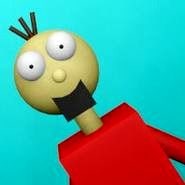
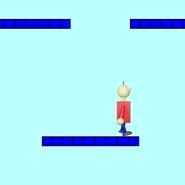
Boxing Random’s controls collapse jumping and punching into a single input — W for Player 1, Up Arrow for Player 2 — so every button press launches your boxer into the air while throwing a punch at the same time. There’s no separate block or dodge; positioning and timing your jump-punch relative to your opponent’s is the entire skill of the game. Because the boxers are ragdolls rather than rigid sprites, that single input produces wildly different results depending on the exact angle and momentum at the moment of contact.
Head Shots Decide Rounds, Not Total Damage
Unlike a typical fighting game tracking a health bar down to zero, Boxing Random usually ends a round the moment one boxer lands a solid hit to the opponent’s head — a single clean shot is often enough to win the point outright rather than requiring a sustained combo. That changes the pacing completely: rounds can end in under two seconds if a punch connects clean, or drag on as both ragdolls flail and miss for much longer if neither lands a clean head shot.
The Rocket Punch and Other Random Weapons
Beyond bare fists, Boxing Random occasionally hands both boxers a rocket punch — a weapon that removes an opponent’s head on a direct hit, but is notoriously difficult to aim since the rocket’s trajectory tends to wander rather than fly true. Because both players usually have access to it when it appears, the rocket punch becomes less about skill and more about who commits to swinging first, which fits the game’s overall embrace of chaos over precision.
Random Arenas, Random Everything
True to its name, the “Random” element extends past weapons into the arena itself: matches can shift to a beach setting, an icy ground with reduced footing, or throw in weather effects and altered boxer appearances round to round. None of these changes are cosmetic-only — an icy arena changes how much a jump-punch’s landing slides, which means the same input pattern that won a previous round can fail on the next arena’s footing.
Playing Solo Against the CPU in Boxing Random
Boxing Random works as a single-player game against a CPU opponent, but the local 2-player mode sharing one keyboard is built around a different kind of read entirely — a CPU boxer doesn’t bluff jump timing the way a second human player at the same keyboard does, which changes what “predicting the opponent” actually means between the two modes.
What Two-Player Sessions Actually Come Down To
Reading your opponent’s jump timing matters more than reaction speed alone, since both players are limited to the same single jump-punch input — predicting when the other player will commit to a jump is how experienced players win clean head shots rather than trading misses.
Adjusting to the current arena’s footing is the second-biggest factor players discuss, since an icy round rewards a completely different jump timing than a standard flat arena.
Treating the rocket punch as a gamble, not a guaranteed kill — because its aim wanders, committing to a rocket swing when a normal punch would land clean is a common mistake newer players make once the weapon appears.
Boxing Random never asks for more than one button, but between ragdoll physics, shifting arenas, and a rocket punch that refuses to go where it’s aimed, that single button ends up carrying a surprising amount of the same chaos the entire Random series is known for.